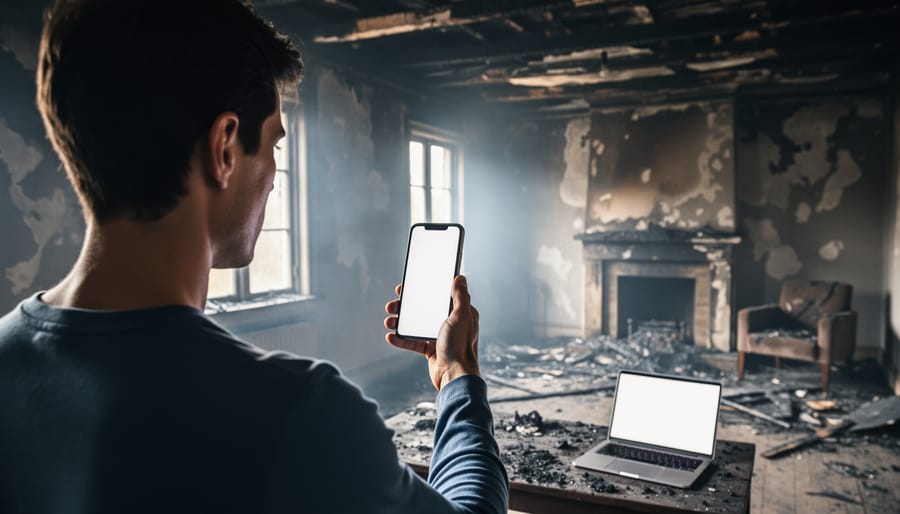
Document every damaged area with your smartphone camera, capturing wide-angle shots of entire rooms and close-ups of specific items—modern fire damage assessment web apps transform these photos into detailed loss inventories worth thousands in insurance claims. Upload images directly through your browser, tag items by category, and generate professional reports without downloading software or scheduling costly in-person appraisals.
When fire strikes your property, you need answers fast. Traditional assessment methods require waiting days for adjusters while uncertainty about your home’s value compounds the stress. If selling becomes your best option, find out how digital assessment tools expedite the entire process, giving you control during an overwhelming time.
Fire damage assessment web applications represent a significant shift in property recovery technology. These cloud-based platforms use artificial intelligence to analyze destruction patterns, estimate repair costs, and create comprehensive documentation that insurance companies accept. Unlike paper-based methods or expensive contractor consultations, web apps provide instant access from any device—whether you’re standing in your smoke-damaged living room or coordinating remotely with restoration teams.
The technology works through intuitive interfaces designed for stressed homeowners, not just industry professionals. You simply answer guided questions about your property’s pre-fire condition, upload visual evidence, and receive structured assessments that translate chaos into actionable recovery plans. This democratization of professional-grade tools means you’re equipped with the same resources adjusters and restoration specialists use, leveling the playing field during negotiations and ensuring nothing gets overlooked in your claim.
Why Traditional Fire Damage Assessment Falls Short
When fire strikes your home, every hour counts. Unfortunately, traditional fire damage assessment methods often create frustrating bottlenecks right when you need answers most urgently. Let’s look at why the conventional approach struggles to meet the needs of homeowners in crisis.
The most obvious limitation is time. After a fire, you typically need to wait days or even weeks for a professional inspector to visit your property. During this waiting period, damage can worsen as smoke residue continues corroding surfaces, water from firefighting efforts promotes mold growth, and exposed areas remain vulnerable to weather and theft. This delay doesn’t just slow down your recovery timeline—it can actually increase the total damage and repair costs.
Human error presents another significant challenge. Different inspectors may evaluate the same damage differently based on their experience level, personal judgment, or even how thorough they’re feeling that particular day. You might receive one estimate from your insurance adjuster and a completely different assessment from your contractor, leaving you stuck in the middle trying to determine what’s accurate.
Think about Sarah, a homeowner whose kitchen fire resulted in three different damage assessments varying by over fifteen thousand dollars. The inconsistency left her confused and uncertain about how to proceed with repairs, delaying her family’s return home by several additional weeks.
The documentation process also relies heavily on handwritten notes and photographs that might miss crucial details. An inspector rushing through multiple appointments might overlook hidden smoke damage in air ducts or structural weakening that isn’t immediately visible. These oversights can lead to incomplete repairs and recurring problems months later.
For stressed homeowners already dealing with displacement and emotional trauma, this uncertainty and waiting creates additional anxiety during an already difficult time.
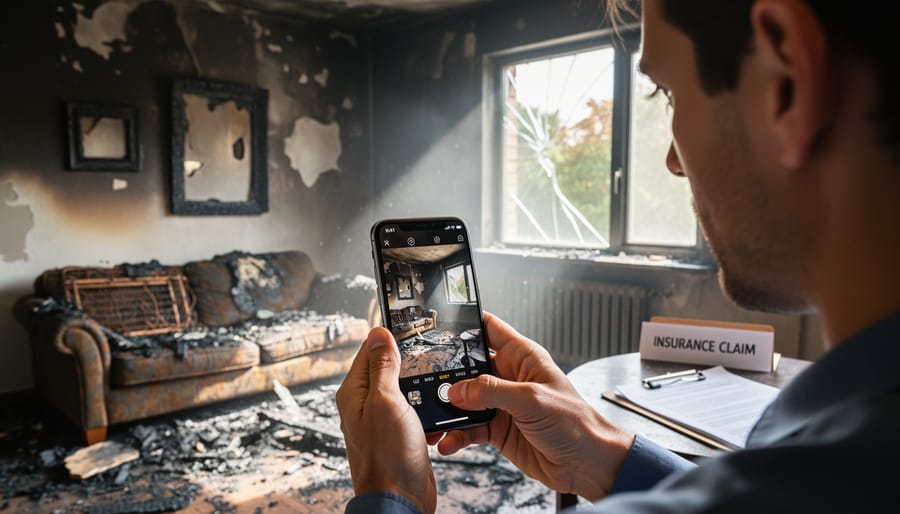
What a Fire Damage Assessment Web App Actually Does
Image Recognition and Damage Categorization
Modern fire damage assessment apps use sophisticated image recognition technology to analyze photos you upload and automatically identify different types of destruction. When you capture images of your property, the web application development behind these tools employs machine learning algorithms trained on thousands of fire damage scenarios.
The app examines each photo to detect structural damage like charred beams, collapsed ceilings, or compromised walls. It can distinguish between active fire damage and secondary issues, such as water damage from sprinkler systems or firefighting hoses. The technology also identifies smoke residue patterns, which helps determine the extent of contamination in areas that may look visually intact.
For example, if you photograph a living room, the app might categorize blackened drywall as severe structural damage, detect waterlogged carpeting from firefighting efforts, and flag soot-covered furniture for specialized cleaning. The system assigns severity levels to each type of damage, creating a comprehensive damage report.
This automated categorization saves considerable time compared to manual inspection notes and ensures consistent documentation across your entire property, giving you accurate information to share with insurance adjusters and restoration professionals.
Automated Cost Estimation
Modern fire damage assessment web apps take the guesswork out of calculating repair costs by automating the entire estimation process. Once you’ve documented the damage through photos and detailed assessments, the software analyzes this information to generate accurate cost projections.
The app works by matching your specific damage data against comprehensive pricing databases that store current market rates for materials, labor, and services in your geographic area. For example, if smoke damage has ruined your kitchen cabinets, the system identifies replacement costs based on local supplier pricing and installation rates. These database systems continuously update to reflect changing market conditions, ensuring your estimates remain current.
The software considers multiple factors simultaneously: the extent of structural damage, square footage affected, material types requiring replacement, and labor complexity. If your hardwood floors need refinishing versus complete replacement, the app calculates both scenarios with different cost implications.
Many platforms also factor in regional pricing variations. A smoke remediation service in a metropolitan area might cost differently than in rural locations, and the software accounts for these differences automatically. This comprehensive approach provides property owners with reliable budget expectations, helping you prepare for insurance discussions and contractor negotiations with confidence and clarity.
Real-World Benefits for Homeowners Facing Fire Loss
Instant Documentation for Insurance Claims
One of the most valuable features of fire damage assessment apps is their ability to generate comprehensive documentation before your insurance adjuster even steps through the door. Think of it as preparing your evidence in advance rather than scrambling during the inspection.
When you use these apps to photograph damage, measure affected areas, and categorize losses room by room, the software compiles everything into a professional report. This documentation includes timestamped photos, detailed descriptions, and often estimated replacement costs based on current market data. Having this ready means you’re not relying solely on memory or handwritten notes when discussing your claim.
Here’s a real-world example: imagine your kitchen suffered significant fire and smoke damage. Your app-generated report shows the exact square footage of charred drywall, lists every damaged appliance with photos, and documents soot contamination throughout adjacent rooms. When the adjuster arrives, you’re presenting organized, verifiable information rather than walking them around and hoping nothing gets missed.
This preparation serves two critical purposes. First, it significantly speeds up the claims process since adjusters can quickly verify your documentation rather than starting from scratch. Second, and perhaps more importantly, it protects you from undervaluation. Insurance companies sometimes offer initial settlements below actual damage costs, but when you have detailed evidence already compiled, you’re in a stronger negotiating position to ensure fair compensation for your losses.
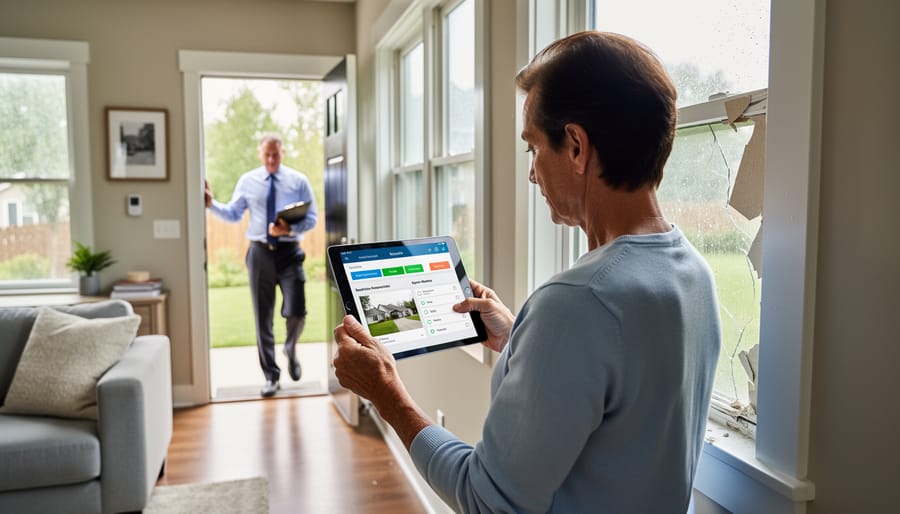
Track Recovery Progress Over Time
One of the most valuable features of a fire damage assessment app is its ability to help you track restoration progress from start to finish. Think of it as your digital project manager, keeping everything organized during what can be a chaotic recovery period.
As restoration work begins, you can use the app to document each phase of the repair process. Take photos of the same areas you captured during your initial assessment. For example, if you photographed water-damaged drywall in your kitchen, snap new pictures as contractors remove the damaged sections, install replacements, and apply finishing touches. This creates a visual timeline that shows exactly what work has been completed.
Most apps let you organize photos by room or date, making it easy to compare before-and-after conditions side by side. This comparison feature proves incredibly helpful when verifying that contractors have addressed all the damage. You can pull up your original assessment photos and check them against current conditions to ensure nothing gets overlooked.
The app also becomes a communication tool with your insurance company and contractors. When questions arise about whether specific repairs were completed, you have documented evidence at your fingertips. Many homeowners find this particularly useful during final walkthroughs, as they can reference their initial damage photos to confirm every issue has been properly addressed.
Keep your app updated throughout the restoration process by adding notes about completion dates and any concerns that arise. This ongoing documentation creates a complete record of your recovery journey and provides peace of mind that you’re moving toward full restoration.
Key Features to Look for in Fire Damage Assessment Software
Mobile-Friendly Interface and Photo Upload
When you’re standing in your fire-damaged home, the last thing you need is complicated technology. That’s why modern fire damage assessment apps prioritize mobile-friendly interfaces that work seamlessly on your smartphone. You can document everything on the spot without lugging around clipboards, cameras, and paperwork.
A responsive mobile interface means you can navigate the app with one hand while holding a flashlight or steadying yourself in unstable areas. The best apps optimize photo uploads for cellular connections, so you don’t need to wait until you’re back on Wi-Fi to submit your documentation.
Here are practical tips for capturing useful assessment photos: Take wide shots of each room to show overall damage, then close-ups of specific issues like charred walls or melted fixtures. Capture multiple angles of valuable items that were damaged. Include reference objects like a coin or ruler next to smaller damaged items to show scale. Make sure lighting is adequate, using your phone’s flash if necessary, and avoid blurry images by steadying your hand against a wall or doorframe.
Most apps let you add voice notes immediately after snapping photos, which is invaluable for recording details you might forget later, like unusual smells or structural concerns. This real-time documentation creates a comprehensive record while everything is fresh in your mind.
Detailed Reporting and Export Options
Once you’ve documented the fire damage using your web app, the next crucial step is sharing this information with insurance companies and contractors. This is where robust reporting features become essential. The best fire damage assessment apps generate professional PDF reports that include photos, cost estimates, and detailed room-by-room breakdowns—exactly what insurance adjusters need to process your claim quickly.
Think of it this way: a stack of random photos on your phone won’t carry the same weight as a comprehensive, organized report with timestamps and measurements. Most insurance companies prefer standardized formats, and leading apps allow you to export data as spreadsheets too, making it easy for contractors to create repair quotes directly from your assessment.
Real-world example: After a kitchen fire, one homeowner used their assessment app to generate a PDF report within hours. Their insurance company approved the claim in just three days instead of the typical two-week wait, simply because all required documentation was already properly formatted and complete.
Look for apps that let you customize reports with your insurance policy number and claim details. The ability to email reports directly from the app or save them to cloud storage ensures you’ll never lose critical documentation during an already stressful time.
Integration with Insurance and Restoration Services
Modern fire damage assessment apps are taking recovery a step further by connecting you directly with the people who matter most during this stressful time. Many platforms now integrate seamlessly with insurance providers, allowing you to submit your documented damage, photos, and cost estimates straight from the app to your insurer’s system. This eliminates the hassle of printing reports or sending multiple emails back and forth.
Some apps go even further by partnering with certified restoration companies in your area. Once your assessment is complete, the app can share your damage report with pre-vetted restoration professionals who can provide quotes and begin work faster. Think of it as a one-stop hub where your assessment flows smoothly from documentation to claim filing to actual repairs.
These integrations rely on secure data storage solutions that protect your sensitive information while making it accessible to authorized parties. The real benefit here is time savings. Instead of coordinating between multiple parties separately, the app acts as your central command center, keeping everyone on the same page and accelerating your path to recovery.
How Restoration Professionals Use These Tools
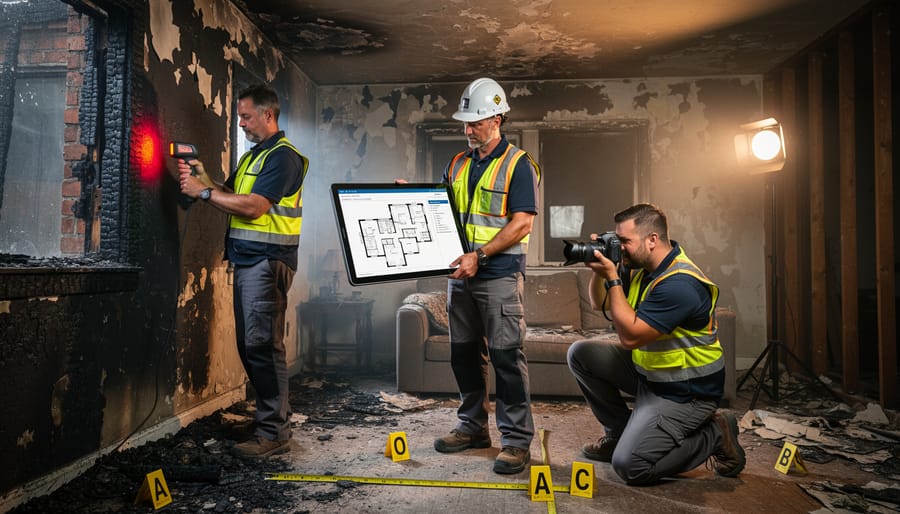
Fire damage restoration professionals have discovered that these web apps dramatically streamline their workflow, saving hours on each project while improving accuracy. Restoration companies use these tools to create consistent, detailed reports that satisfy insurance requirements and provide clients with transparent documentation of the damage.
Insurance adjusters particularly appreciate the standardized reporting features. Instead of taking handwritten notes and sorting through hundreds of photos later, they can document everything on-site using tablets or smartphones. The apps automatically organize images by room and damage type, attach measurements to specific areas, and generate preliminary cost estimates based on industry databases. This means adjusters can often provide homeowners with initial assessments within hours rather than days.
Contractors leverage these platforms to coordinate with multiple stakeholders efficiently. When a restoration team arrives at a property, they can access the initial assessment report, see exactly what work needs completion, and update the file with progress photos. This real-time collaboration eliminates the confusion that often occurs when different professionals work on the same project without shared information.
Many of these applications integrate with project management systems and accounting software, creating a seamless process from initial assessment through final billing. Similar to how software development relies on structured processes, restoration professionals benefit from systematic digital workflows that reduce errors and missed steps.
For example, a restoration company in Colorado reported cutting their documentation time by 60 percent after adopting a fire damage assessment app. They found that clients felt more confident in the process because they could view detailed reports and progress updates through a shared portal, reducing anxious phone calls and improving customer satisfaction scores significantly.
Getting Started: Your First Fire Damage Assessment
Starting your first fire damage assessment might feel overwhelming, but modern web applications have simplified the process significantly. Here’s how to get up and running, even if you’ve never used this type of software before.
Begin by creating your account on the platform of your choice. Most fire damage assessment apps offer a free trial period, giving you time to explore features without commitment. You’ll typically need to provide basic information like your name, email address, and property details. Once registered, you’ll receive a confirmation email—click the link to activate your account and log in.
After logging in, you’ll see a dashboard or home screen. Don’t be intimidated by the interface. Most platforms include a guided tour or tutorial for first-time users. Take advantage of this feature, as it highlights the main tools you’ll need. Look for a button labeled “New Assessment” or “Start Report” to begin documenting your fire damage.
The assessment process usually follows a room-by-room approach. Start with the area that suffered the most visible damage. You’ll be prompted to upload photos—use your smartphone camera to capture multiple angles of damaged walls, ceilings, floors, and belongings. The app may use technology similar to web frameworks to organize your images automatically.
Next, you’ll categorize the damage level for each item or area. Most apps use simple scales like “minor,” “moderate,” or “severe.” Don’t worry about being perfectly accurate—you can always revise entries later. Include written descriptions of smoke odors, water damage from firefighting efforts, and structural concerns.
A practical tip: complete one room fully before moving to the next. This prevents information overload and creates a logical flow in your final report. The entire process for an average-sized home typically takes 45-60 minutes.
Once you’ve documented all affected areas, click “Generate Report.” The app compiles your photos, descriptions, and damage assessments into a professional document you can share with insurance adjusters, contractors, and restoration specialists.
Dealing with fire damage ranks among life’s most overwhelming challenges, but fire damage assessment web apps place professional-grade tools directly in your hands when you need them most. These digital solutions transform what was once a confusing, paperwork-heavy process into something manageable, giving you clear documentation, accurate estimates, and organized records that insurance companies actually want to see.
The beauty of these apps lies in their accessibility. You don’t need technical expertise or special training to capture room dimensions, photograph damage systematically, or generate professional reports. They guide you through each step with simple instructions, turning your smartphone into a powerful assessment tool that works alongside your recovery team.
Whether you’re reading this as a preventive measure or you’re currently facing fire damage recovery, exploring these solutions now can save you tremendous time and stress later. Many apps offer free trials or basic versions, letting you familiarize yourself with the technology before an emergency strikes. By understanding what these tools can do, you’re better prepared to document damage thoroughly, communicate effectively with adjusters, and move forward with rebuilding your life with confidence and clarity.